

Breath test for lactose, fructose and sorbitol intolerance
A simple and painless test that helps you discover if your heavy digestion, gas or bloating is due to a food intolerance.
We call you
Error: Contact form not found.

Analyze 3 common digestive intolerances in a single test

Just breathe: no needles, no pain

Without a prescription

It allows you to adjust your diet and improve your digestion

Available at Ribera Lab centers with complete convenience
What is the breath test?
The hydrogen breath test is a non-invasive diagnostic test that measures the gases produced when digesting certain sugars. If your intestines don't absorb them properly, bacteria ferment them and generate hydrogen, which passes into the bloodstream and is exhaled.
Thanks to this analysis we can identify intolerances to lactose, fructose and sorbitol, three of the most common.
What intolerances does it detect?
Lactose
the natural sugar in milk and dairy products.
Fructose
present in fruits, honey and many processed foods.
Sorbitol
natural sweetener present in fruits such as apples or pears and in "sugar-free" products.
Knowing your intolerance will help you adapt your diet and reduce discomfort such as bloating, gas, or abdominal pain.
Who is this test for?
✓ People with frequent digestive symptoms: gas, abdominal pain, bloating, diarrhea or indigestion.
✓ People who suspect intolerance to milk, fruits or products with sweeteners.
✓ Patients with chronic digestive problems without a clear cause.
✓ People who want to confirm intolerance before starting a restrictive diet.
Previous preparation
For the test to be reliable, it is important to follow these instructions:
Avoid antibiotics, probiotics and laxatives at least 4 weeks before.
24 hours before: low fiber and fermentable sugars diet (avoid fruits, vegetables, legumes, bread, sweets).
Attend in fasting for 8–12 hours.
Do not smoke, chew gum, eat candy, or do strenuous exercise on the day of the test.
Brush your teeth with water or sugar-free toothpaste only before coming.
How is the breath test performed?

Step 1:
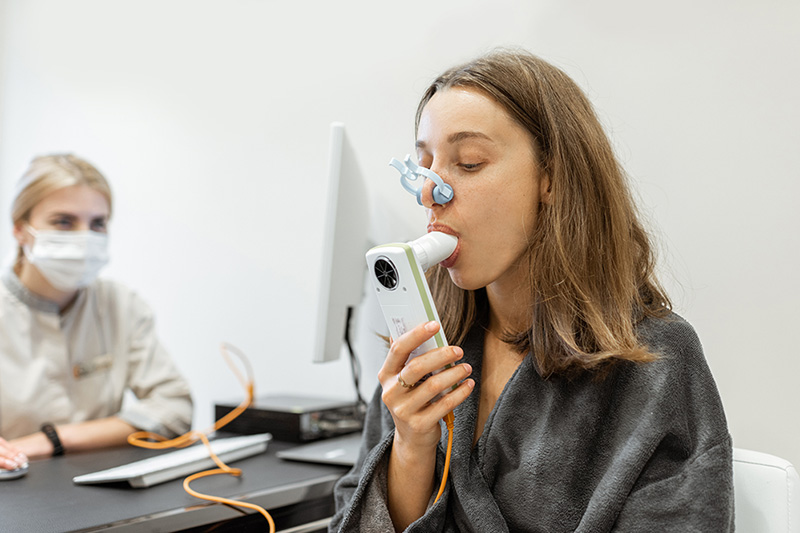
The patient breathes into a device to measure baseline gases.
Step 2:
He is given one sugar solution to be studied (lactose, fructose or sorbitol).
Step 3:
New breath samples are collected every 20–30 minutes for 2–3 hours.

Step 4:
The laboratory analyzes whether there are increases in hydrogen that indicate poor absorption.
It's a test safe, painless and comfortable.
Results
You will receive a clear report indicating whether you have submitted intolerance to lactose, fructose or sorbitol.
With the results you will be able to receive personalized dietary recommendations.
In some cases, it is advisable to gradually reintroduce foods to assess the level of tolerance.
Post-test tips
If the result confirms intolerance, adjust your diet It helps improve symptoms.
Today there are alternatives: lactose-free products, low-fructose substitutes or sorbitol-free products.
A nutritionist can help you design a personalized plan.